
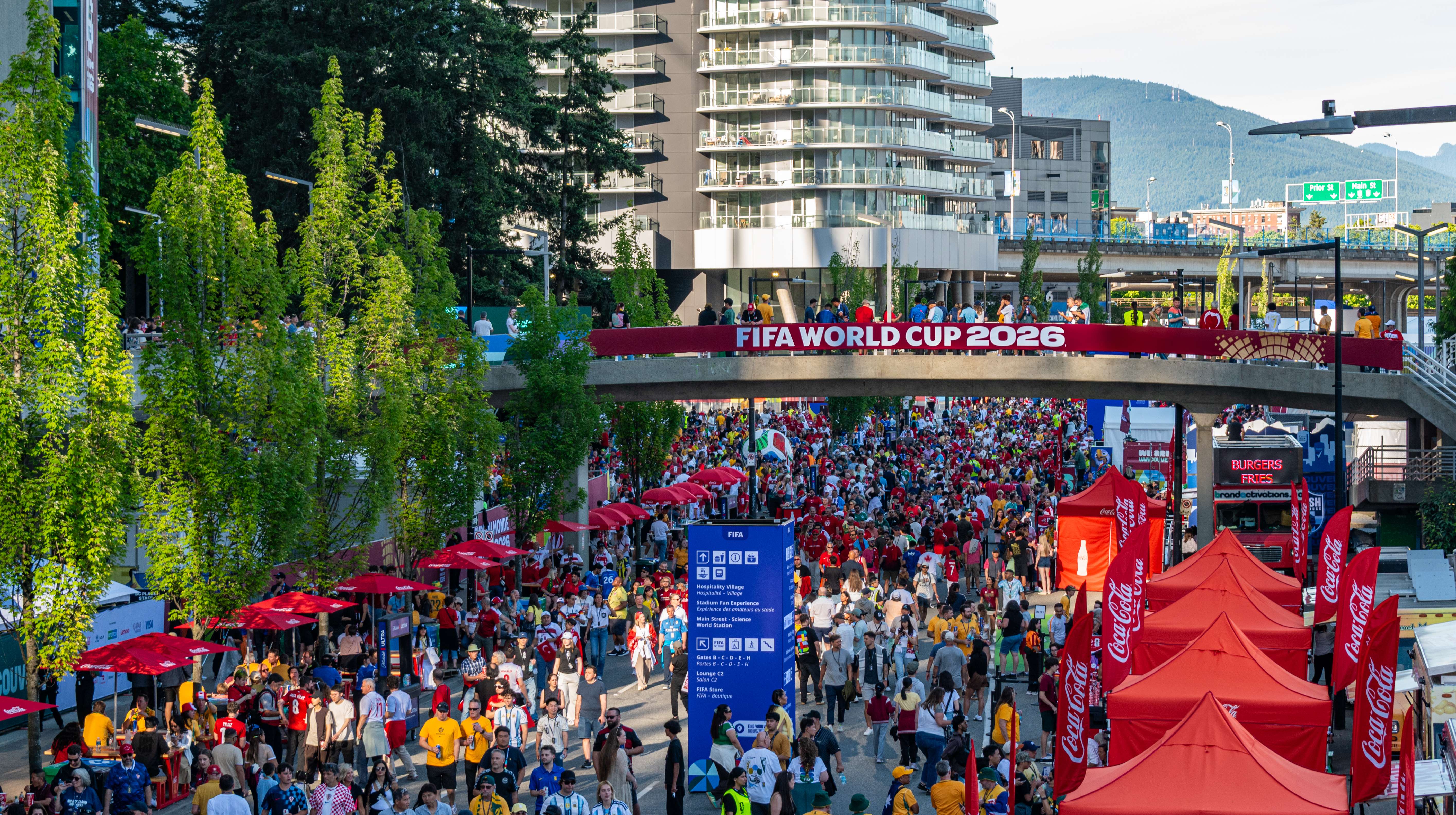


Despite much doubt from the international community, the World Cup in North America was a resounding success. The 38-day tournament wrapped up on Sunday with Spain’s triumph over Argentina, a bittersweet moment that signaled not just victory for La Roja but also the end of one of the greatest summer events in our nation’s history. Co-hosted along with Canada and Mexico, the United States put forth a world-class set of stadiums for the games, showing off our assets and accentuating the many diasporas that call this land their home. There’s a lot to reflect upon as we relive this incredible summer: the energy and the passion, the sights and the sounds, and so much more.

Europeans Come to America
Many preconceived notions were busted when droves of fans from the European continent descended upon the US. They marveled at our American football stadiums, were blown away by sellout crowd after sellout crowd and got overwhelmed – for better or for worse – by our culture of excessiveness. In some cities, they were floored by the public transit networks; in others, by gigantic twenty-lane highways. Some even made pilgrimages to outposts of Buc-ee’s and Waffle House in an effort to ascertain a truly American experience.
The biggest European influencer by far was an X user known as Freddy. Along with his buddies, the German sensation toured everywhere from the rural South to the inland northeast, all the while posting about his adventures to social media. Freddy ended up in places where tourists from overseas don’t typically go, like backwoods Tennessee, the Delmarva Peninsula and Oklahoma City. His refreshing take on the lesser known parts of the country deeply echoed with a populace that had grown weary of hearing disparaging remarks about their home. Nearly singlehandedly, Freddy turned the tide of foreign opinion on the United States over the course of his six-week jaunt.
Joyful Jingles
One of the best by-products of the tournament was the world’s exposure to some new party bops and football anthems. The Netherlands were dominant in this category, with throngs of Oranje fans side-stepping through the streets of Houston, Kansas City, Arlington and Monterrey to the tune of Links Rechts by Snollebollekes. Bosnia & Herzegovina fans also brought us I Am From Bosnia, the French debuted Ô Dictateur Mbappé, and we learned of the English ballad celebrating Norway star Erling Haaland.
Venue Regrets and Rebuffs
Sixteen venues across the United States, Canada, and Mexico hosted the tournament. While stadiums like MetLife Stadium, SoFi Stadium, AT&T Stadium, Mercedes-Benz Stadium and Lumen Field were obvious choices, others were a bit more controversial. Players had to endure the heat and humidity at Hard Rock Stadium in Miami, while the aging Arrowhead Stadium in Kansas City became an unofficial home for Lionel Messi and runners-up Argentina. Guadalajara was the only host to not hold a knockout round match, and with capacities under 50,000, the venues in Guadalajara, Toronto, and Vancouver were among the tournament’s smallest. Among the notable facilities left out of the running: U.S. Bank Stadium in Minneapolis, Allegiant Stadium in Las Vegas, State Farm Stadium in Phoenix, Soldier Field in Chicago and Empower Field in Denver.

Marches to the Match
Thanks primarily to the melting pot culture of the US and Canada, throngs of supporters for every competing nation turned out to even the Group Stage games, making themselves known and drowning cities during their Marches to the Match. Uzbekistan made waves as the first Central Asian nation to qualify for the tournament, and then stole the spotlight again when fans of the White Wolves arrived to their matches on horseback. Fans of the Netherlands turned entire streets orange, jumping laterally and shouting chants. Norwegians rowed and rowed, the Scots brought their bagpipes and Colombians gave Vancouver a yellow look it had never seen before.
The Baseball Crossover
Baseball was the only overlapping sport with the tournament and in many cities, entire fan groups swarmed the gates of MLB stadiums. Supporters of Norway rowed their way into Citi Field in New York, while the English cheered on the Atlanta Braves.
Perhaps most notably, Scotland’s massive Tartan Army took over a game at Boston’s Fenway Park. As they backed the Red Sox in a Sunday night loss to the Texas Rangers, the Scots waved flags and led chants that forged a soccer-like experience at America’s Beloved Ballpark. They also notoriously ran the city’s bars dry, consuming every last ounce of beer at many establishments around Boston.
Expansion Excitement
The expansion of the FIFA World Cup from 32 to 48 teams was a controversial move for many people, with some seeing it as a tradeoff between quantity and quality. However, that proved not to be the case, as many smaller nations held their own against the traditional powers. DR Congo earned a draw against England, while Curaçao – the smallest nation ever to qualify – held Ecuador to a draw behind 15 saves from goalkeeper Eloy Room. The biggest story, however, was Cape Verde, which became the smallest nation ever to reach the knockout stage. They drew with Uruguay and Spain in the group stage before nearly upsetting Argentina, forcing the eventual runners-up into extra time. Rather than diluting the competition, the expansion to 48 clubs created more exciting matches, more meaningful contests and an expanded Round of 32 that gave more countries the opportunity to compete on the world’s biggest stage.
Leave a Reply