


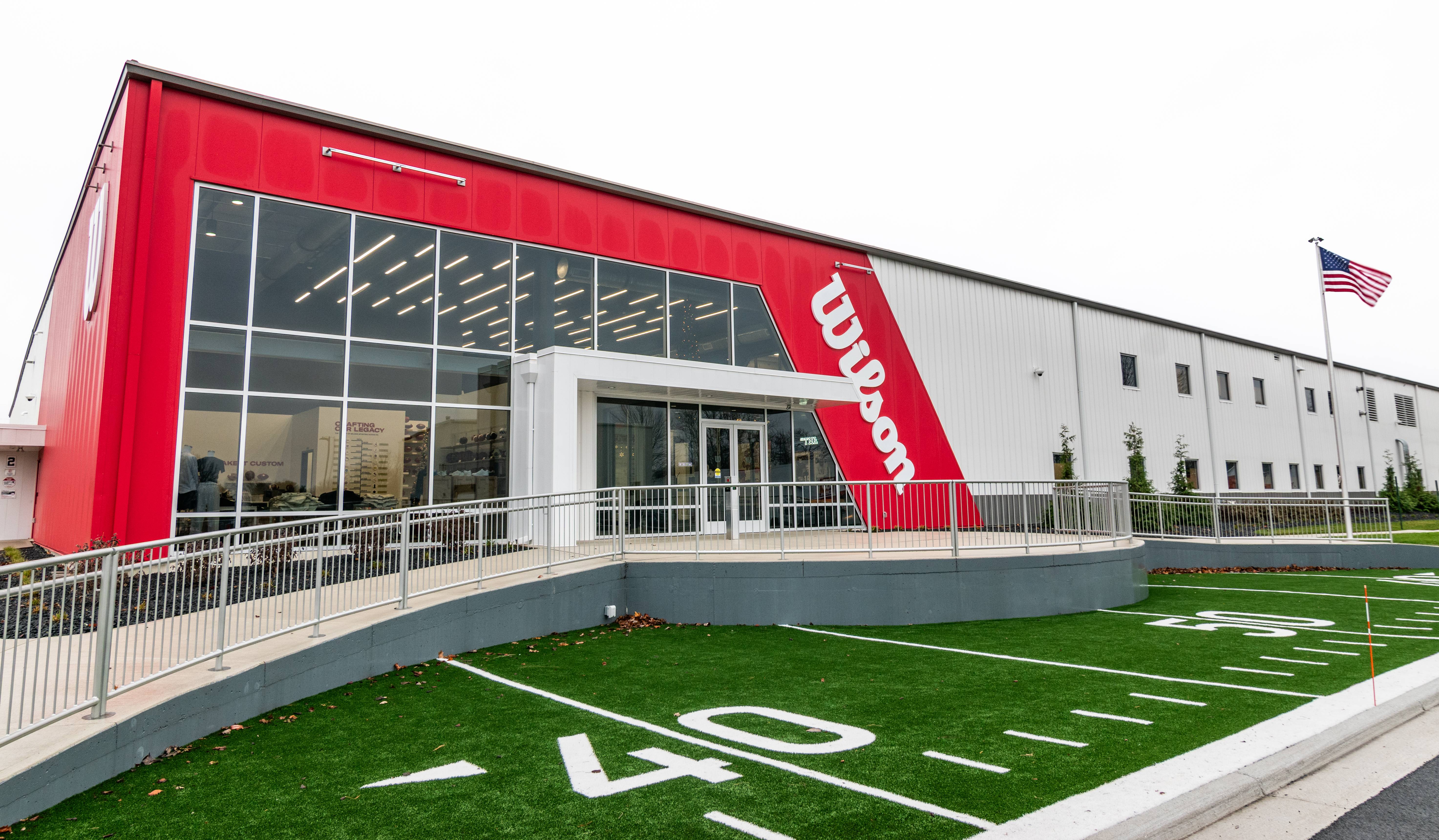
In a small Midwest town in northwest Ohio, the dedicated and skilled employees at the Wilson Football Factory quietly fuel America’s most followed sport. Since 1955, every NFL football has been handcrafted here in the heart of Ada, a village of just over 5,000, and the pigskin-producing facility remains the only one in the country exclusively churning out leather footballs.
The Wilson brand itself dates to the early 1900s, where it began as a meatpacking company in New York. Early on in its history, the company acquired a knitting mill and a Chicago-based athletic equipment supplier and, by the 1920s, the company had become Wilson-Western Sporting Goods. Even before sports became its sole focus, the company had been working with legendary coach Knute Rockne to produce balls for the blossoming game of American football.
In 1941, the football world was revolutionized when Wilson introduced a hand-stitched Horween leather ball with lock-stitch seams and triple lining, named “The Duke” in honor of former New York Giants owner Wellington Mara, who bore the nickname. The NFL has used Wilson as its sole football supplier ever since.

The story of football production in Ada originates in 1955, when Wilson created a football with Tanned-in-Tack cowhide, giving players a better grip. For decades, every NFL football came out of a small, cramped warehouse on Highland Avenue, just off the town’s main drag. But in 2024, a brand-new facility opened just down the street, doubling production capacity while preserving Wilson’s unique handmade techniques. Now, more than 120 skilled men and women craft over half a million footballs every year at what remains the only leather football manufacturing plant in the United States.
Visitors to the factory can witness the start-to-finish creation of a Wilson football firsthand. In addition to a full retail store a small museum area, the 60-minute guided walkthrough of the main production floor offers rare behind-the-scenes glimpses of each of the different steps in the process.
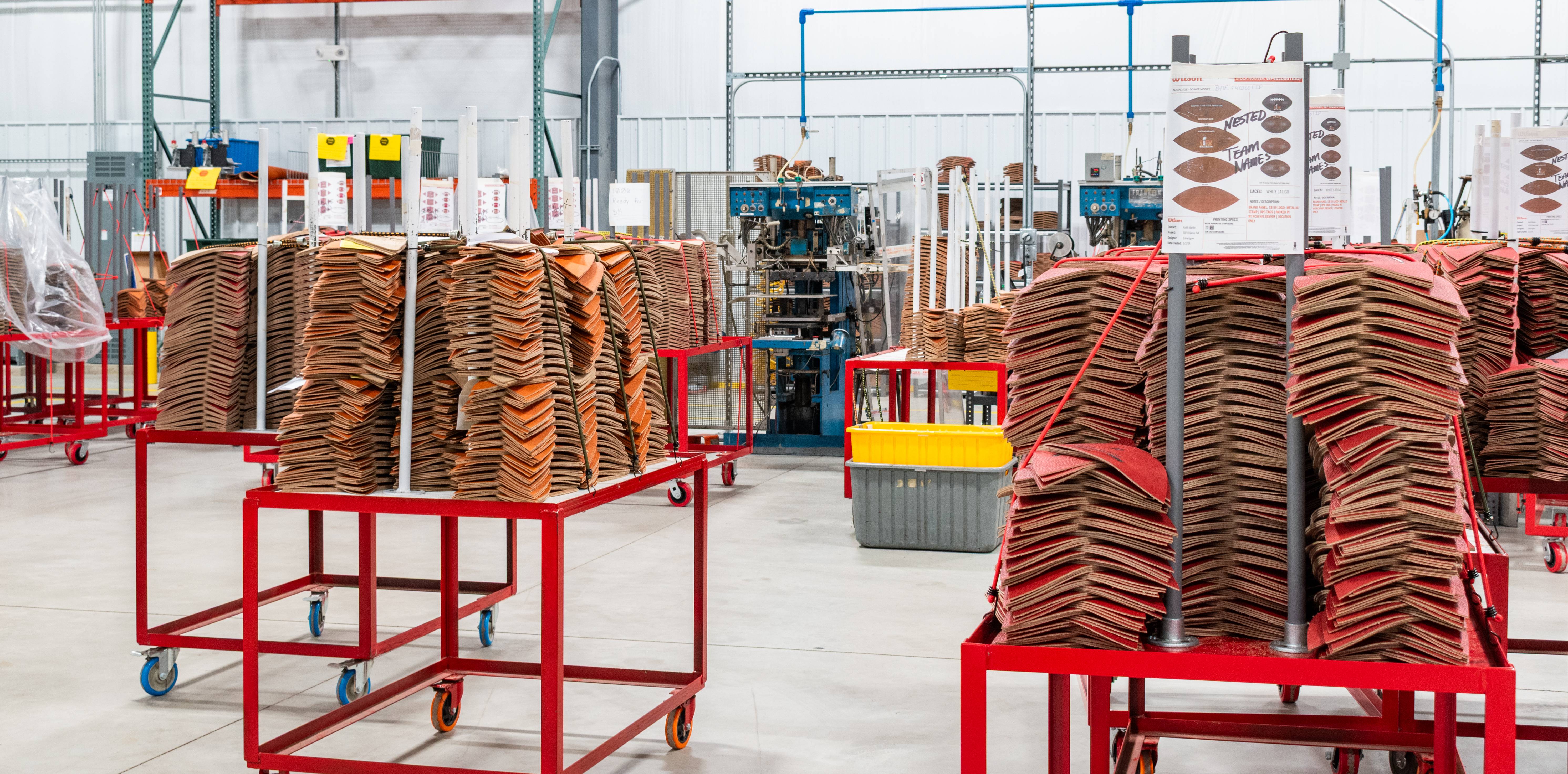
The premium leather is first cut into four panels, sized according to the level of play: Pee Wee, Junior, Youth, High School/College or the NFL. Cutters must work diligently to match the color and grain of these panels to help the ball maintain a consistent color, a nuanced task.

Each panel then undergoes an embossing process, where metal plates reaching up to 500ºF stamp small “W” logos into the leather. Logos and names are also heat-applied in a metallic foil or added as laminated decals, depending on the ball’s design. This can include custom logos requested by the client, which are drawn up by the talented minds in the graphics department.
Once stamped, the panels are stitched together inside-out, a method that allows the seams to remain hidden within the final ball. The top halves are joined first, and a backing is applied to strengthen the panels and help the ball maintain its odd shape.
Next comes turning, the most physically demanding step of the entire process. Each inside-out shell is softened in a steamer for about 30 seconds, then reversed by hand using a metal bar. Only the strongest and most skilled workers can complete this step in under a minute, a test of dexterity and technique.
Each ball is then laced, shaped, inflated and inspected before it’s ready to ship out for use in the NFL, CFL, college football, high school football or any youth league in between. But whether you’re a sports fan or not, visiting this charming Ohio town and learning about the history and fabrication of a 100% American-made icon is a valuable experience.
Wilson Football Factory Tour
517 E Highland Ave, Ada, OH 45810
Open Monday-Friday for tours; $15

Leave a Comment