

BUY THIS PHOTO AS A PRINT OR CANVAS >
State College, Pennsylvania
🏈 Penn State Nittany Lions
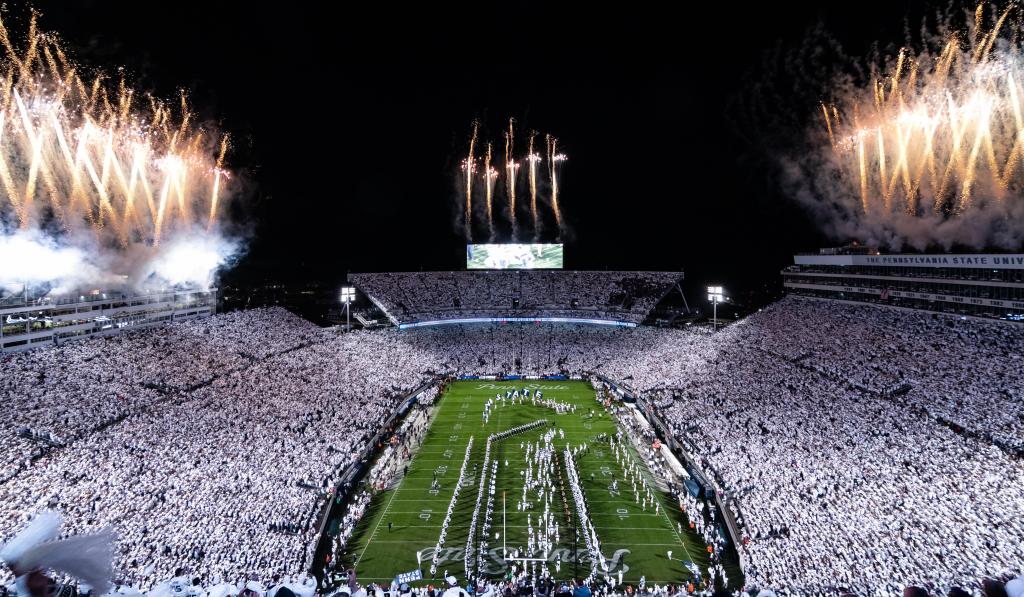
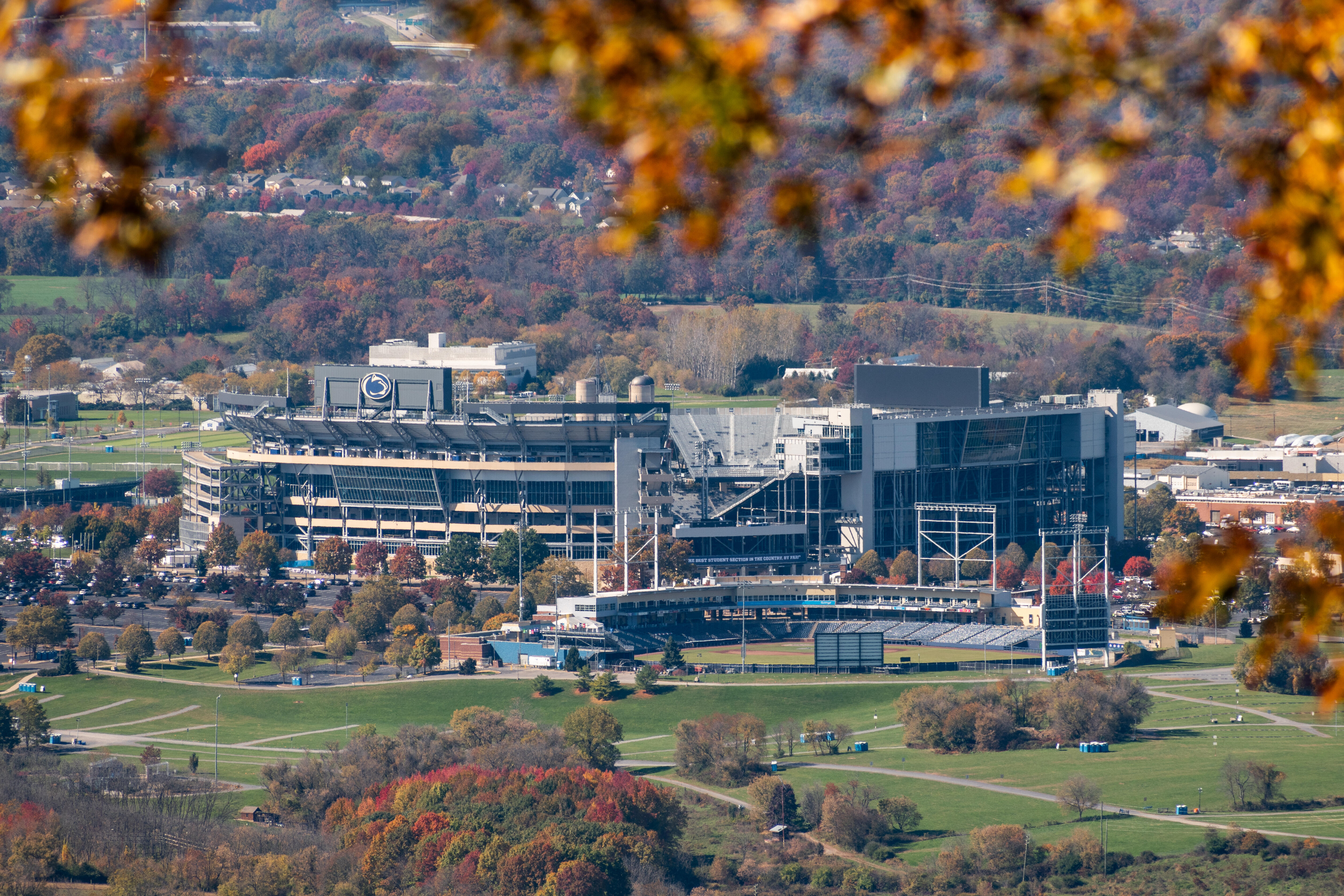
Smack dab in the middle of the Keystone State, the steel facade of Beaver Stadium stands tall against the rolling autumn landscape of the central Pennsylvania hills. And on seven Saturdays each fall, the roars of the Penn State faithful resound across an otherwise peaceful Happy Valley from inside this colossal college sports mecca.
Named for former university president and Pennsylvania Governor James Beaver – who was also a Civil War hero – the stadium is the second largest in the nation and the fourth largest in the world. With a capacity of a little more than 106,000, the home of the Nittany Lions falls just behind Michigan Stadium in terms of size. The building’s all-time attendance record, however, sits at hair over 111,000 people and was set in 2024 during a ranked matchup against the rival Ohio State Buckeyes.
Beaver Stadium opened in 1960 and has undergone many renovations and expansions throughout the years that have steadily increased its overall capacity. One of the largest additions, that of the south end zone structure in 2001, added more than 13,000 new seats but controversially enclosed the stadium and blocked views of Mount Nittany in the distance. What is arguably the biggest overhaul yet is expected to wrap up in 2027, a project that includes expanded concourses, new videoboards and entirely new West grandstand.
The Whiteout
BUY THIS PHOTO AS A PRINT OR CANVAS >
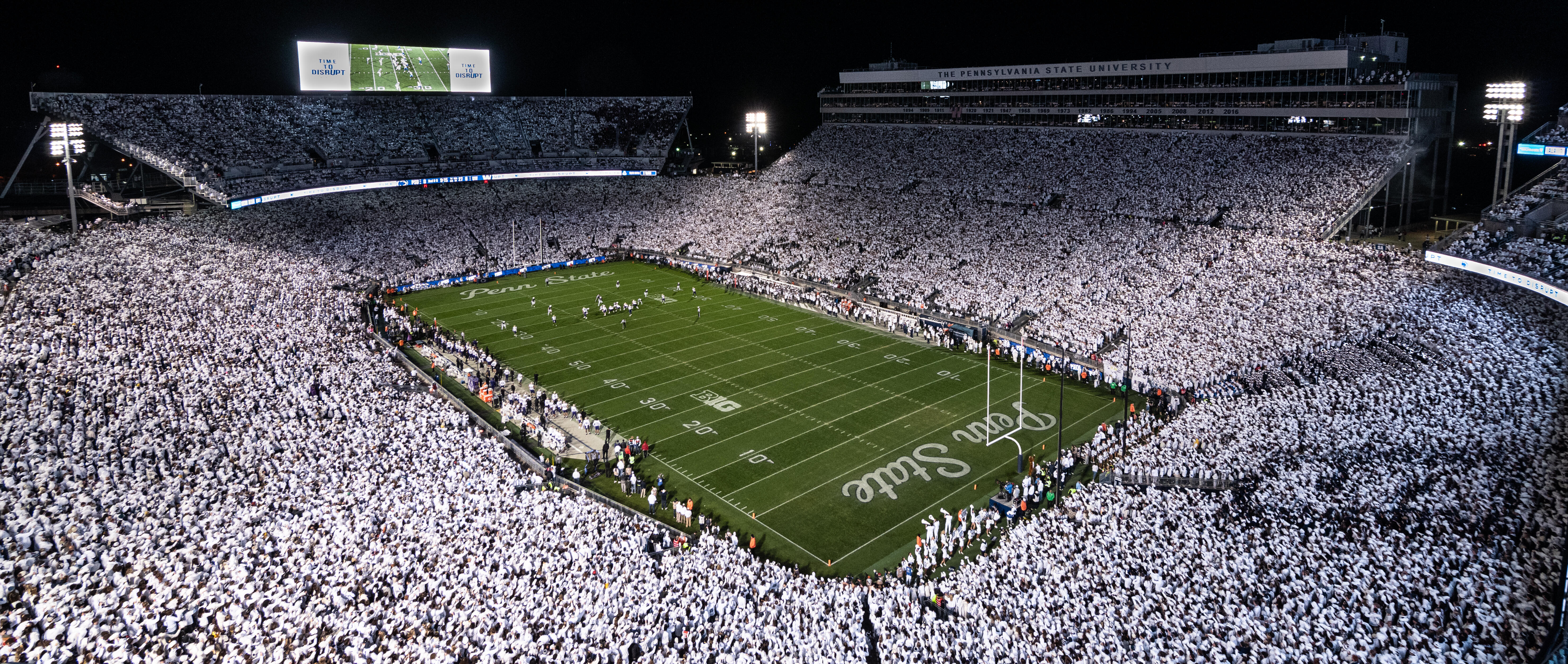
Penn State’s most notorious themed event, the acclaimed Whiteout game, draws some of the team’s largest and craziest crowds and attracts millions of eyes on national television. Now an annual State College staple, the Whiteout unofficially began in 2005, spurned from an old Winnipeg Jets practice – though that iteration of the Jets had relocated to Arizona by the time – and the first official version at Penn State occurred in 2007. Today, the intensity of the game motivates students to camp out in “Nittanyville”, a makeshift tent city outside the stadium gates, for days beforehand in the hopes of securing a spot at the heart of the action. Held against marquee Big Ten opponents, the tradition fosters one of the most spirited atmospheres in American sports and is a bucket list must.
With a legacy dating back to 1887, Penn State football had humble beginnings on the lawn of Old Main. The program quickly outgrew the space and moved to Old Beaver Field in 1893 before transitioning to New Beaver Field in 1908. They’d play there until Beaver Stadium – which was partially built using grandstands from its predecessor – opened for the 1960 season.
No matter where their stomping grounds have been, Penn State has compiled an impressive resume that includes 2 claimed national titles, more than 30 bowl game wins and a 140-season winning record. A longtime independent, the Nittany Lions joined the Big Ten Conference in 1993 and has competed in the circuit ever since. There, the team has won 4 conference titles and has already made a run in the new College Playoff format that debuted in 2024. Throughout Beaver Stadium, the university celebrates its storied history with large murals featuring standout Penn State players from the past and support columns wrapped with Nittany Lion bowl game lore.
Penn State All-Sports Museum
Located under the south end zone seating structure, the Penn State All-Sports Museum is an in-depth journey through the trials and triumphs of Nittany Lion athletics. Opened in 2002, the space touches on 34 varsity sports that have been played in State College over the last century.
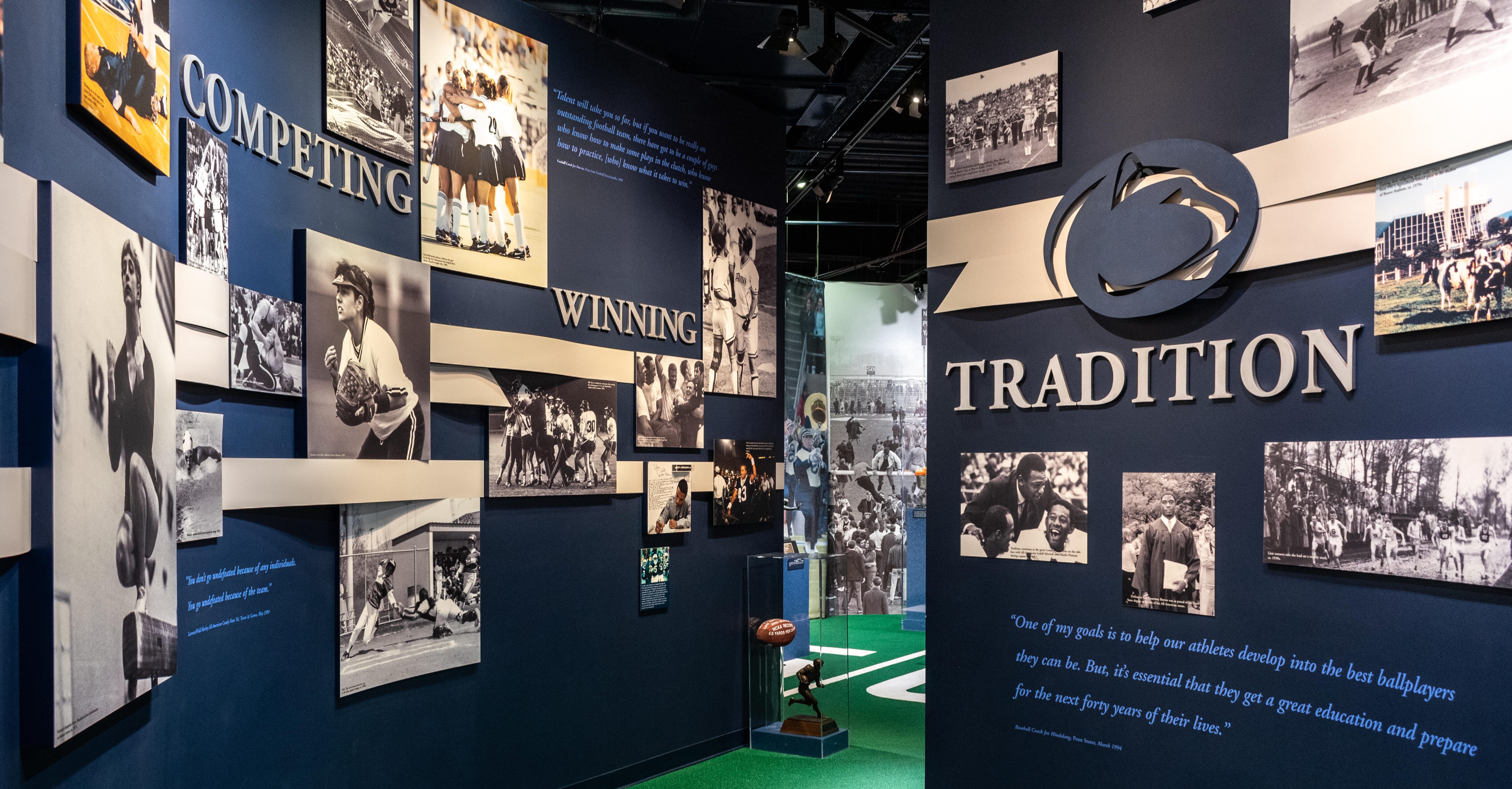
Spanning two floors, the museum highlights indoor sports on its upper level and outdoor sports downstairs. Football, of course, is a focal point of the museum, with an artificial football turf decorating the floor of this part of the museum and loads of memorabilia on display, including the 1986 College Football National Championship trophy.
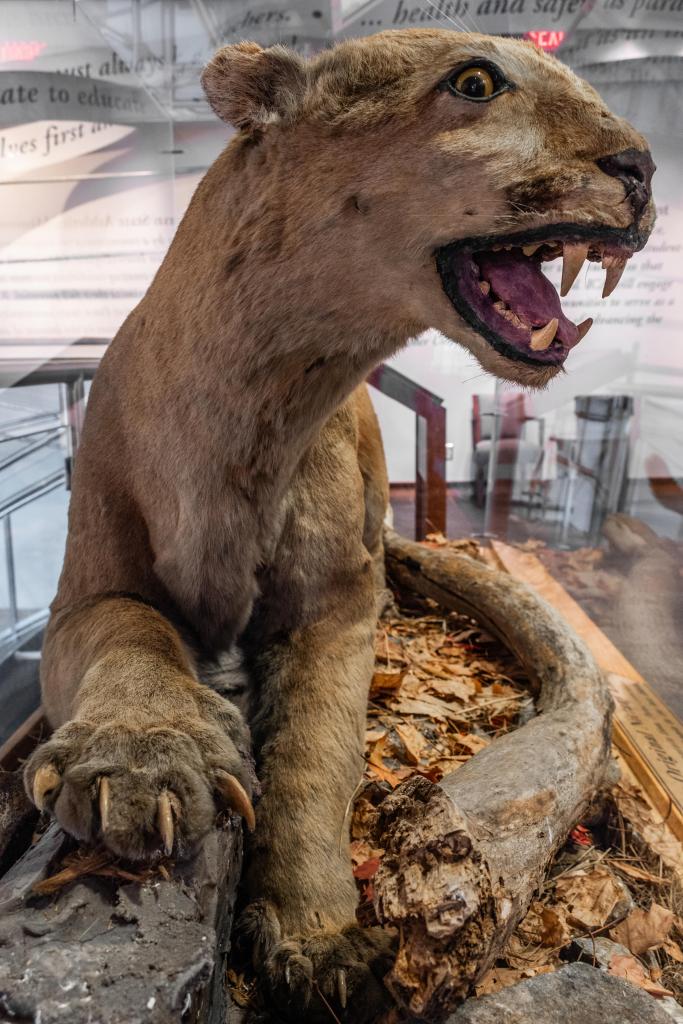
There’s also a small exhibit on the origin of the Nittany Lion name and mascot. Front and center is a taxidermized mountain lion that was killed in the hills near State College way back in 1856. This specimen likely inspired the iconic Nittany Lion name, which was adopted in 1907 and is a nod to the mountain which looms over the region. The suited live mascot that’s become a staple at sporting events subsequently made his first appearance at a football game in New York in 1922.
The best part of the museum is that it’s free to visit, though there is a suggested donation of $5 per person. The exhibits are open to viewing Tuesday-Sunday and there’s also occasional tours offered of Beaver Stadium, but note that tours likely need to be booked in advance.
From the pre-game tailgate to kickoff and all the way until the final whistle, gameday in State College is a truly special experience. Each weekend, thousands of Nittany Lion faithful descend upon the town and host parties and all-inclusive cookouts outside the Beaver Stadium gates. As kickoff nears and 100,000+ flood into the venue, the beloved Nittany Lion runs out onto the field, does a flip and seems to bring the whole crowd to life. Chants of “We Are … Penn State” echo across Happy Valley, and for night games and some ranked matchups, fireworks explode from all four sides of the stadium’s structure. Songs blasted through the stadium’s speakers also pump energy into the stadium, including Zombie Nation’s Kernkraft 400, which has become synonymous with the Penn State football experience. Once the game itself is underway, the atmosphere doesn’t get any quieter, with sustained noise when the visiting team has the ball helping to give the Nittany Lions their distinct home field advantage.

BUY THIS PHOTO AS A PRINT OR CANVAS >
All the buzz and excitement certainly makes fans hungry. Thankfully, Beaver Stadium has a plethora of concessions, most of which feature quintessential Pennsylvania brands. In addition to the basic food options, there’s a small cart from the Penn State Creamery – famous, of course, for ice cream but also for “grilled stickies” – a Chickie’s and Pete’s crab fries stand, a Philly Pretzel Factory cart and an outpost of We Are Inn cheesesteaks.
As each game comes to a close and football season gives way to spring, the spirit of the Penn State Nittany Lions stays alive in Happy Valley. Both the celebrated traditions and palpable atmosphere leave a lasting impression on first-time fans and still thrills those who have been coming to games for decades. Likewise, Beaver Stadium will continue to be a place where memories are made – both on the field and in the stands – as renovations continue and new experiences emerge.
Info Invasion
Parking: Free street parking in the neighborhood southeast of College Ave; approx. a 20-30 minute walk
Nearby Venue(s): Medlar Field, Bryce Jordan Center
In the Area: Penn State All-Sports Museum

Leave a Comment