

El Paso, Texas
🏈 UTEP Miners
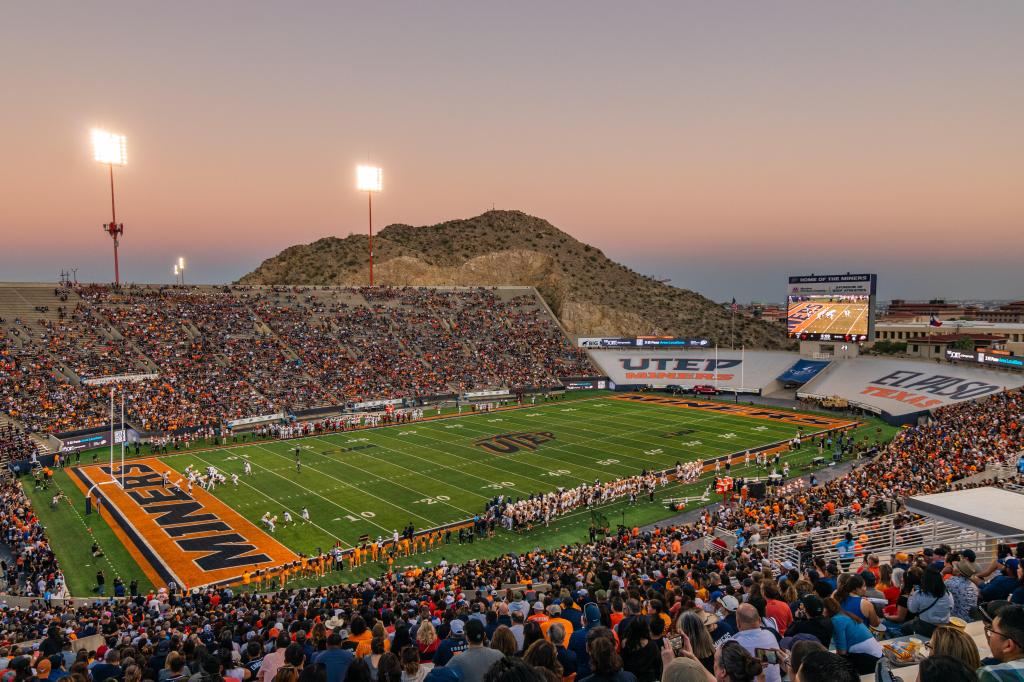
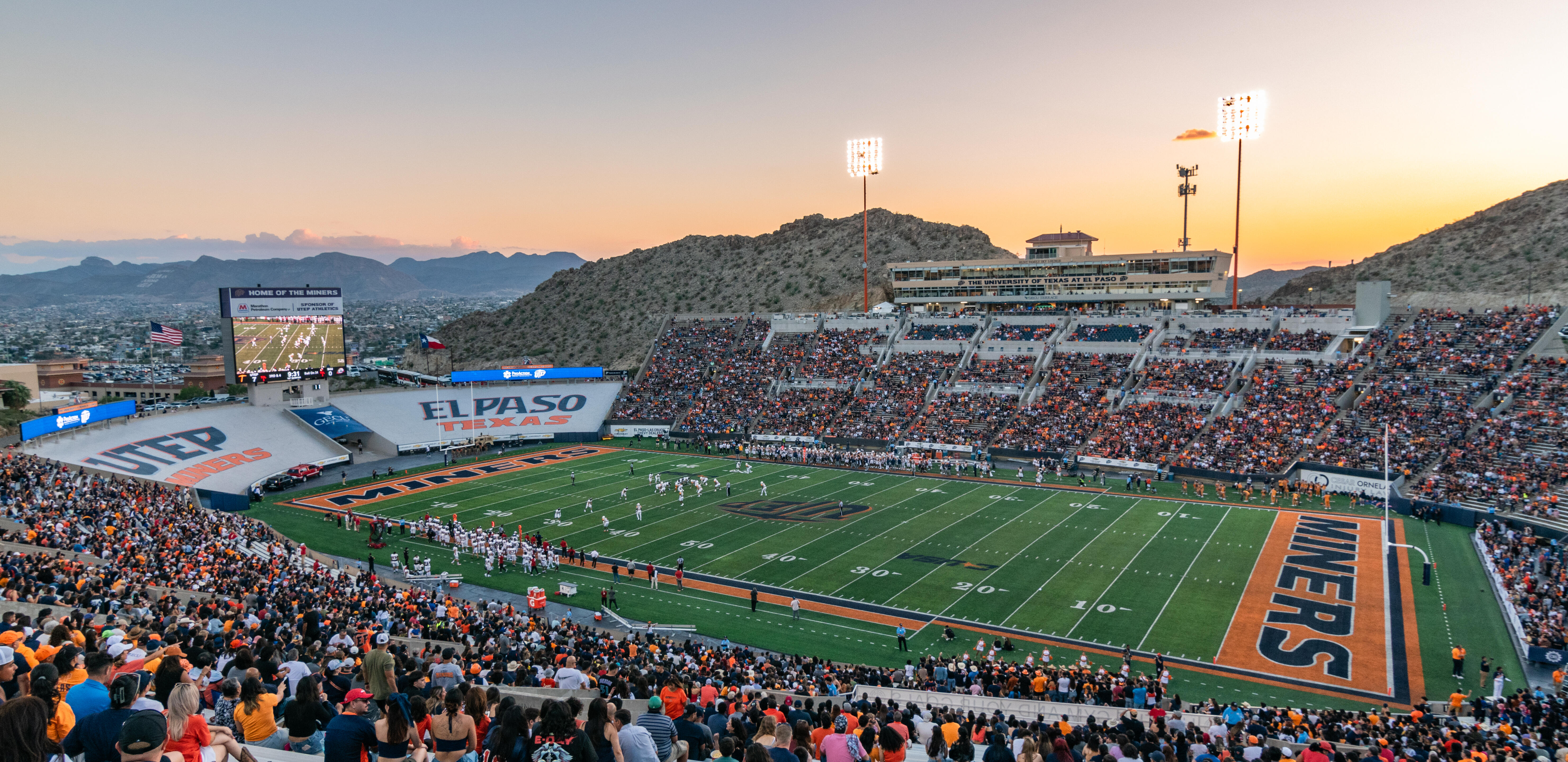
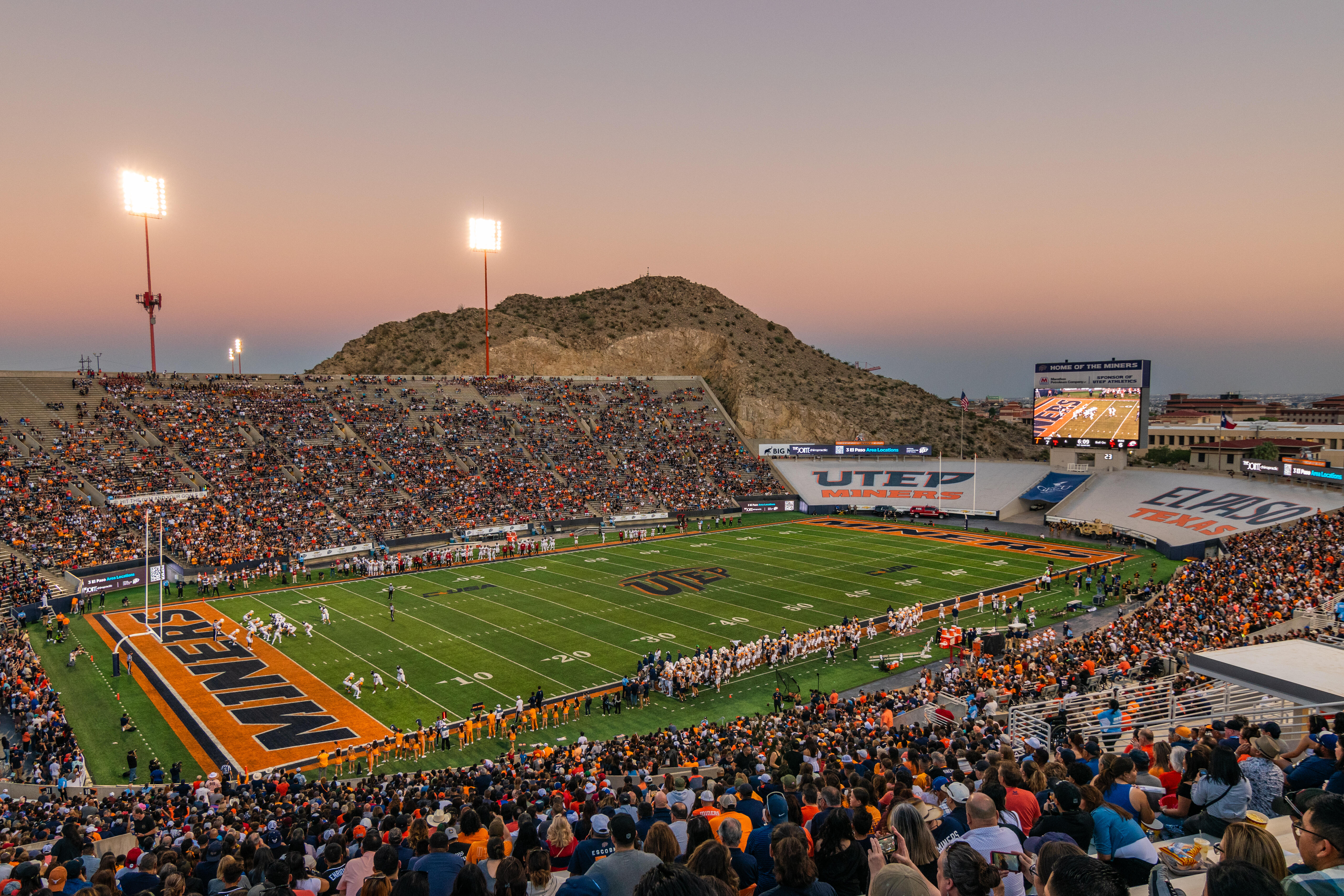
Carved into the dusty El Paso hills, the iconic Sun Bowl is indisputably the most unique venue in college football – and possibly the world. It’s an architectural oddity, perfectly nestled in a natural stadium-shaped basin that overlooks the city of El Paso and the rugged urban terrain of neighboring Mexico. For more than six decades, the venue has been home to the UTEP Miners and the annual Sun Bowl game for which it is named.
The stadium’s origins date back to 1963, when it was built as a replacement for cramped Kidd Field next door. The Sun Bowl holds around 50,000 spectators and features a distinctive horseshoe shape, which allows for sweeping vistas of Ciudad Juárez beyond the south end zone. Indeed, the cityscape of Chihuahua’s most populous city and the Sierra de Juárez behind it provide a breathtaking backdrop for fans inside the Sun Bowl, the closest FBS venue to an international border in the United States and the only one from which you can see two countries at once.
Like much of the rest of the UTEP campus, Dzong architecture dominates the exterior of the venue. This one-of-a-kind Bhutanese style is hardly found outside of its area of origin, leaving the Sun Bowl with no parallel in not only the sports world, but truly all across the globe.
BUY THIS PHOTO AS A PRINT OR CANVAS >
The Sun Bowl game itself has a long and storied history, with the first edition of the event coming on January 1, 1935. A year later was the first Sun Bowl contested between college teams, with New Mexico A&M and Hardin-Simmons playing to a 14-14 tie. The Sun Bowl is the second-longest running bowl game – predated only by the Rose Bowl – and, over the decades, it has slowly become one of the most prestigious postseason matches.
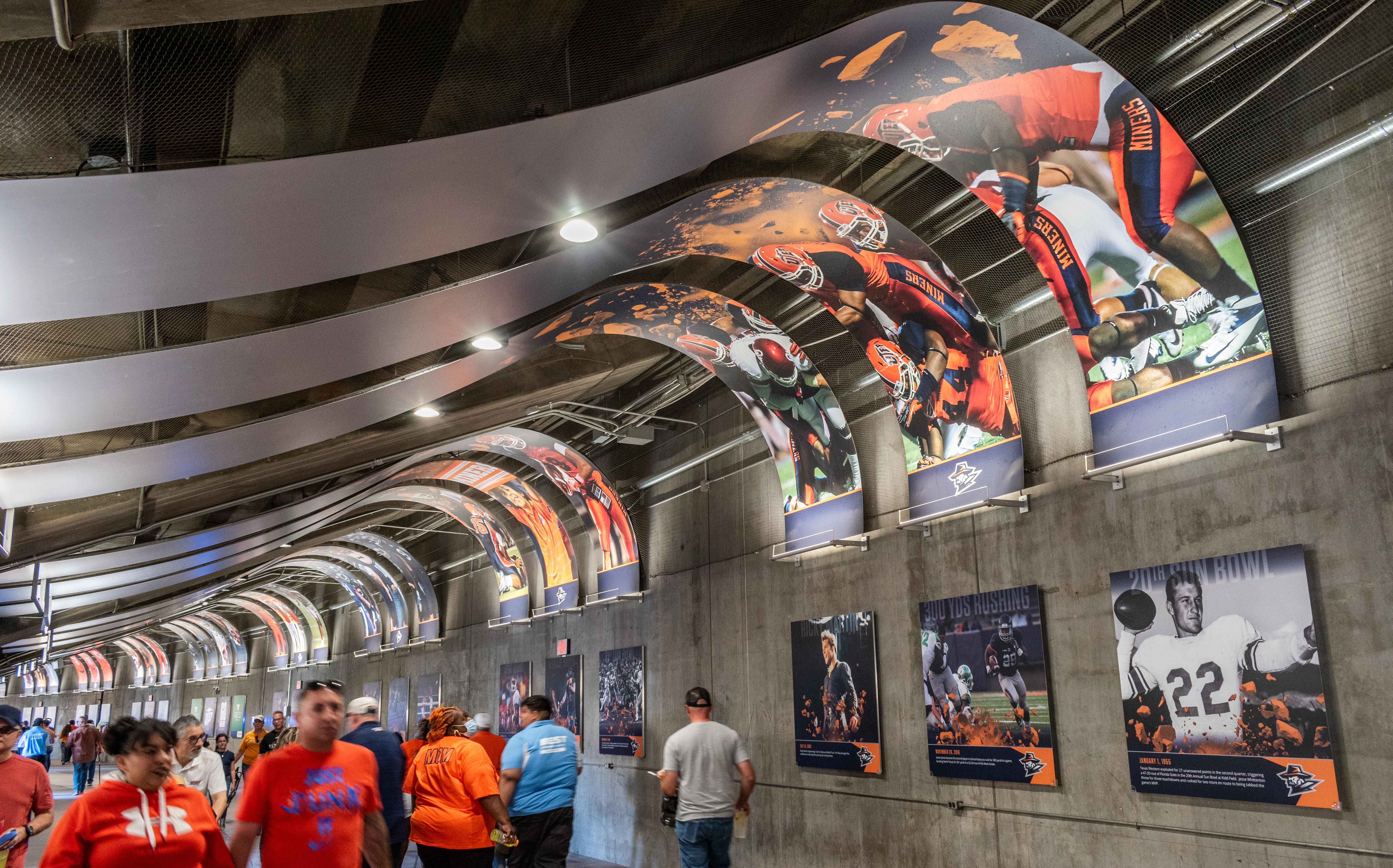
As you wander the stadium, the concourse is adorned with photographs and informative plaques highlighting the UTEP Miners athletic programs, the Sun Bowl, its eponymous event and the many concerts and festivals held at the venue. From basketball’s legendary National Championship in 1966 to football’s two conference titles and 14 bowl game appearances, the stadium walls serve almost as a living museum.
And gameday in El Paso is nothing short of a party. Tailgaters arrive extra early and make a day out of it, with drinks, music and sidewalk games galore. Inside the stadium gates, a plethora of booths and stands offer up every kind of cuisine imaginable, from burritos and TexMex to giant fresh fruit cups, dipped bananas and boba teas. As kickoff nears, the Sun Bowl roars to life. During player introductions, when their beloved Miners walk across the main concourse from the locker room and enter the seating bowl through “The Mine Shaft” near section 17, the whole stadium erupts as their boys descend the stairs down to the field. Often, military jets or helicopters from nearby Fort Bliss are also a part of the pre-game festivities, flying over as the national anthem concludes.
The Sun Bowl’s extraordinary blend of architectural grandeur and surrounding natural beauty makes for a gameday atmosphere that is truly remarkable. The mountains, the views and the palpable energy created by the Miner faithful have been captivating fans for more than 60 years, and it’s easy to understand why this venue is considered a crown jewel of college football. The splendor of the Sun Bowl and its environment should undoubtedly push it to the very top of anyone’s college football bucket list.
Info Invasion
Parking: Free in Schuster 1
Nearby Venue(s): Don Haskins Center, Memorial Gym
In the Area: Ride down the old El Camino Real route and visit the area’s three historic missions

Leave a Comment