


With the Oakland A’s almost certainly heading to Las Vegas in the next few years and the Tampa Bay Rays moving in to a new ballpark around the same time, MLB expansion is on the horizon. Commissioner Rob Manfred has expressed interest in growing the league to 32 teams, though not until some time around the end of the decade. Among his short list of expansion cities are Nashville, Charlotte, Salt Lake City, Portland and Montreal. Of these, Nashville and Salt Lake seem to be the most prepared and well-suited candidates, so let’s hop in the time machine to a future where baseball has taken hold of the Volunteer and Beehive States…
Restructuring the Minor Leagues
One of the biggest repurcussions of expansion is the need for new minor league development affiliates. Thankfully, many former Minor League Baseball teams are prepared to make a comeback after suffering contraction in 2021 and some of the most successful independent franchises are ready to make the leap to affiliated ball.

Utah Trappers
Founded: 2030
Origin of Name: Revived name of an old minor league team
Colors: Blue and Yellow 🔵🟡
Venue: Rocky Mountain Power Park
Located on the west side of SLC, this 30,000-seat ballpark is the anchor of the Rocky Mountain Power District, a mixed-use development similar to that of The Battery in Atlanta. Accessible by the light rail line along North Temple Street, the stadium offers views of the nearby Wasatch Mountains and is close to major freeways, making it less than 10 minutes from both downtown and from Salt Lake City International Airport.
Triple-A
The Trappers’ top affiliate is conveniently just down the road in the planned community of Daybreak, located in the suburb of South Jordan. Here, the Salt Lake Bees entertain fans at Daybreak Field, which opened in 2025.
The Bees were formerly affiliated with the Los Angeles Angels, whose new AAA club is the Fresno Grizzlies, competing in the Pacific Coast League. Knocked down from Triple-A to Single-A during the realignment of the minors in 2021, the Grizzlies were a partner of the Colorado Rockies until 2029. Meanwhile, the Rockies’ new Single-A affiliate became the Charleston Dirty Birds, pulled from the independent Atlantic League and reassigned to the Carolina League.
Double-A
Formerly an affiliate of the Las Vegas Athletics, the Midland RockHounds became the Double-A farm team for Utah when they joined the league. Consequently, the A’s new affiliate was placed in Savannah, Georgia as a competitor in the Southern League. Birthplace of the circus-act Savannah Bananas, the city was more than deserving of real minor league baseball and constructed a new downtown ballpark that debuted in 2030 for their revived Savannah Sand Gnats.
High-A
Another former minor league franchise that was contracted during realignment in 2021, the Kane County Cougars left the American Association and rejoined the Midwest League to become the High-A affiliate of the Trappers.
Single-A
Replacing Fresno in the California League is the Oakland Ballers, an indy team that began competing in the Pioneer League in 2024.
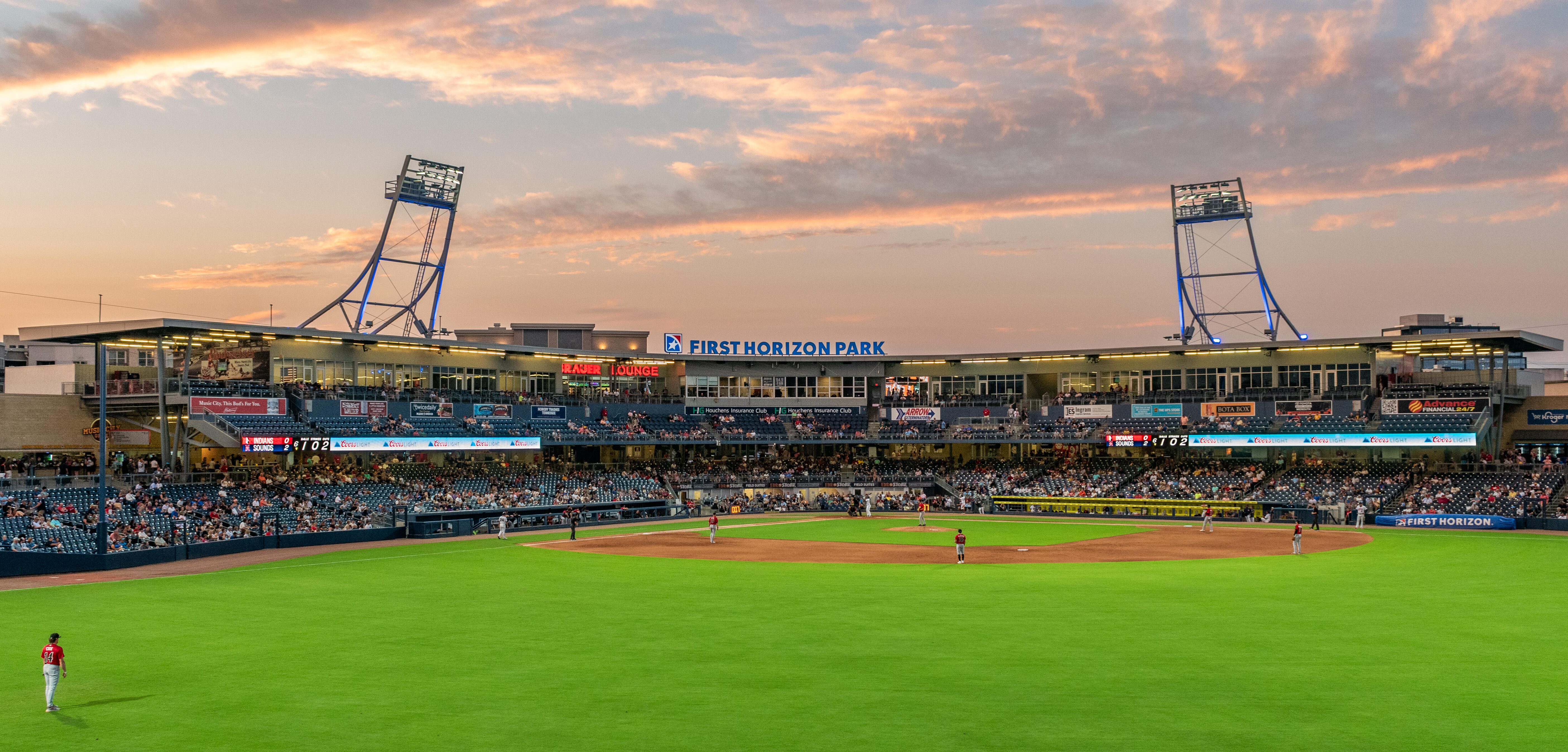
Nashville Stars
Founded: 2030
Origin of Name: The iconic stars on Tennessee’s state flag
Colors: Red and Blue 🔴🔵
Venue: Firestone Field
Sponsored by the popular tire company based in Nashville, Firestone Field was built on the site of old Nissan Stadium along the Cumberland River. The former home of the Tennessee Titans, the aging football venue was demolished following the team’s move to their new domed stadium across the street in 2027. Firestone Field seats 36,000 fans and features stupendous views of the Nashville cityscape from its south-facing seating bowl.
Triple-A
Sadly, the Nashville Sounds and the incoming MLB franchise could not co-exist in the Music City, forcing the Milwaukee Brewers to place their Triple-A team elsewhere. They would find their new affiliate in the Wichita Wind Surge, a team originally slated to be a top-level club but relegated to the Double-A Texas League after realignment in 2021.
Back in the South, the Nashville Stars would promote the Double-A Birmingham Barons to the Triple-A International League. The longtime affiliate of the White Sox, the Barons would be replaced by the independent York Revolution of the Atlantic League. The Revs would join the Eastern League along with the New York Boulders, a Frontier League franchise, who replaced Wichita as the Double-A affiliate of the Minnesota Twins.
Double-A
The Double-A shuffle continued with the addition of the Knoxville Smokies to the Nashville farm system. Their former parent team, the Chicago Cubs, claimed the Northwest Arkansas Naturals as their new affiliate, forcing the Kansas City Royals to pull the Kansas City Monarchs from the American Association and place them in Texas League to replace the departed Wind Surge. This, at least, balanced out the two leagues and allowed the Royals to have an extremely close to home farm team.
High-A
Just three hours from Nashville, the Evansville Otters and their historic home of Bosse Field joined the minor league ranks after leaving the Frontier League. Now in the affiliated Midwest League, the Otters are developing some of the Stars’ brightest talent at one of America’s most legendary small ballparks.
Single-A
Also a little over three hours from the Music City, the Lexington Legends regained their status as a minor league team with their move from the Atlantic League to the Single-A Carolina League.
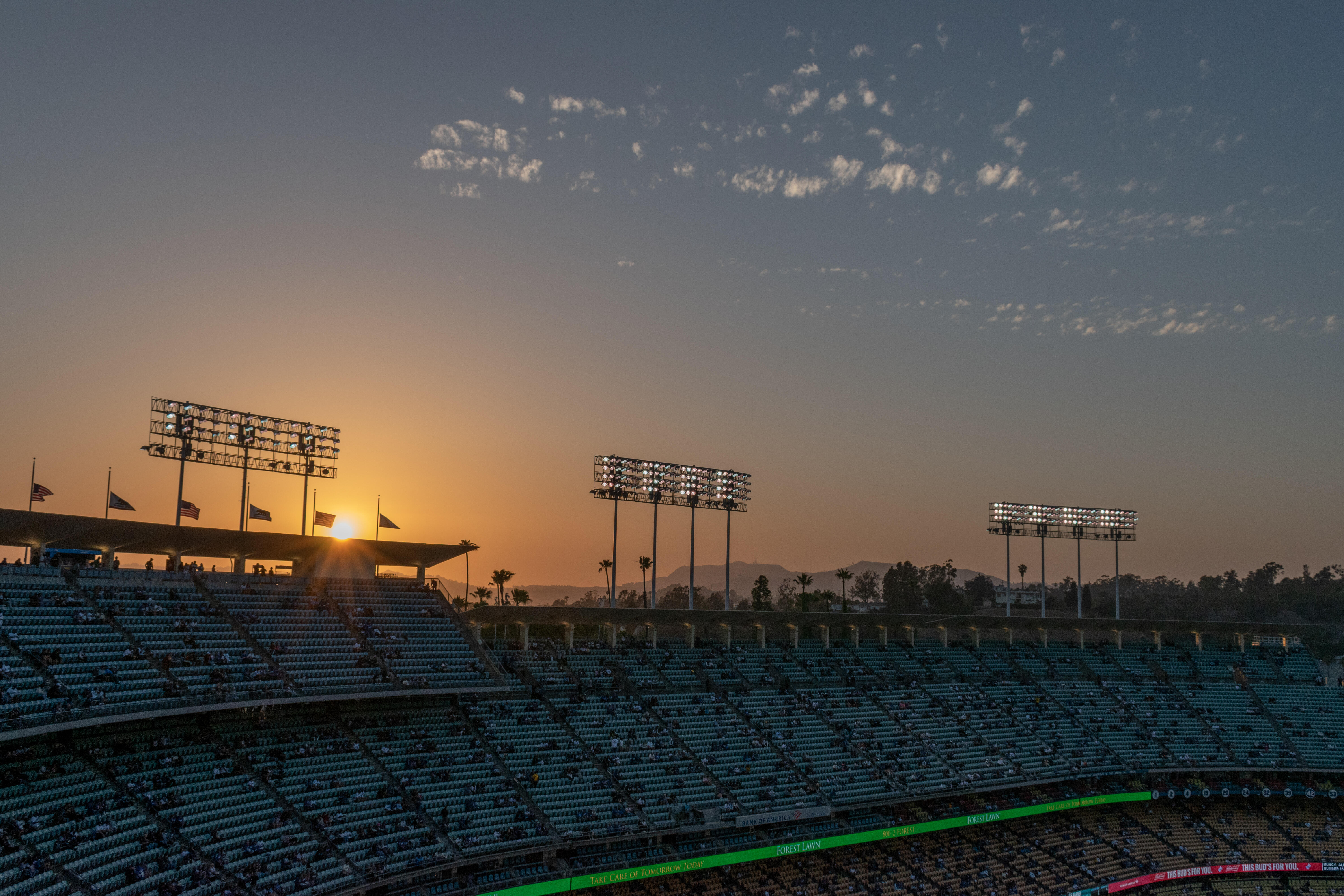
Realigning the Divisions
Of course, with two new teams joining the league, MLB was in desperate need of divisional realignment. With the end goal of improving the geographical grouping of the circuit’s 32 franchises while maintaining some of the legacy rivalries, here’s how MLB’s new two-league, four-division arrangement shook out.
American League
The Ruth Division, named after the one and only Great Bambino:
– Baltimore Orioles
– Boston Red Sox
– Chicago White Sox
– Cleveland Guardians
– Nashville Stars
– New York Yankees
– Philadelphia Phillies
– Toronto Blue Jays
The Williams Division, in honor of baseball’s greatest hitter:
– Colorado Rockies
– Detroit Tigers
– Houston Astros
– Kansas City Royals
– Milwaukee Brewers
– Minnesota Twins
– St. Louis Cardinals
– Texas Rangers
National League
The Aaron Division, a nod to Hammerin’ Hank:
– Atlanta Braves
– Chicago Cubs
– Cincinnati Reds
– Miami Marlins
– New York Mets
– Pittsburgh Pirates
– Tampa Bay Rays
– Washington Nationals
The Robinson Division, celebrating the legend who broke the color barrier:
– Arizona Diamondbacks
– Las Vegas Athletics
– Los Angeles Angels
– Los Angeles Dodgers
– San Diego Padres
– San Francisco Giants
– Seattle Mariners
– Utah Trappers
Even More Expansion…
Now with a cool 32 teams in its arsenal, MLB is yet again exploring the addition of a couple more franchises. This time, with a solid downtown ballpark plan for Portland and improvements wrapping up on Stade Olympique in Montreal, could the league plant even more roots in the Pacific Northwest – and could the Expos make a triumphant return?

Leave a Comment